
UK DIY News
Proportion of New Homes Built in Flood Areas Increases
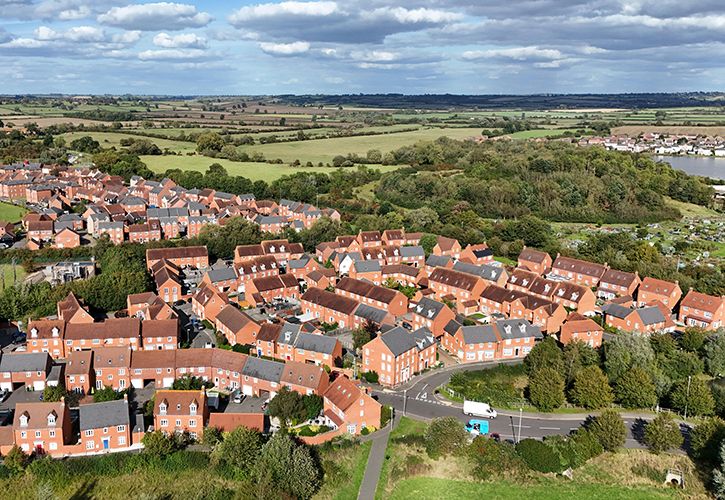
- One in nine (11%) new homes built between 2022-2024 in areas at risk from flooding today[1]
- Number of new homes at risk has risen from 8% over last three years[2]
- By 2050 the number of new homes at risk will rise to 15% or one in seven new homes
- Almost a third (30%) of new homes built in 2024 will be at some risk of flooding by 2050
- Greater London and Essex have the highest number of constituencies with at-risk new homes
- Aviva calls on Government to publish its own figures and strengthen planning laws
One in nine (11%) new homes in England constructed between 2022 and 2024 have been built in areas of medium or high risk of flooding, according to new analysis from insurer, Aviva.[1]
The analysis, which identifies new homes address data combined with the Environment Agency’s latest assessment of flood risk at constituency level[1], shows there is a worrying upward trend of new homes being built in high-risk areas in recent years.
The data reveals that out of the 396,602 new homes recorded by the Ordnance Survey in England between 2022 - 2024,[1] 43,937 are in areas of medium or high risk of flooding. Over a quarter (26%), equivalent to 101,657, new homes have some risk of flooding.
Previous analysis from Aviva[2], based on government statistics, found that 8% of new homes were built in flood risk zones between 2013 and 2022. Comparable figures have not been published since 2022, however, this new study suggests the number of homes built in flood risk areas has accelerated as house building increases.
The outlook for the future is even more concerning. By 2050, 15%, or one in seven, new homes built between 2022 and 2024 will be at medium or high risk of flooding as the impacts of extreme weather become more acute.[1]
This is despite homes built since 2009 being excluded from the Flood Re reinsurance scheme which was set up in 2016 to improve the affordability and accessibility of flood insurance to properties in high-risk areas.
Jason Storah, CEO UK & Ireland General Insurance, Aviva, said: “We support the Government’s plans to build more homes to help drive economic growth. Aviva, as a long-term investor in the UK[3], has already committed £25 billion over the next decade, including into social infrastructure, to support national growth and economic resilience.
“However, this growth needs to be sustainable and it’s vital, therefore, that new homes are built in the right places and with resilience in mind to help homeowners get ready for future impacts.
“As our analysis shows, too many new homes have been built in higher risk areas. It’s particularly worrying that this trend has risen in recent years, just as house building accelerates.
“Importantly, these homes are not protected by the Flood Re scheme, which excludes homes built after 2009 to prevent more new homes being put at risk. Sadly, as the study shows, this simply hasn’t happened.”
The analysis also reveals that new homes are likely to face a greater risk of floods in future than existing properties. Almost a third (30%) of new homes built in the last three years will be at some risk of flooding by 2050, more than the projections for existing properties (one in four).[4]
Constituencies at risk
Aviva’s Building Future Communities report, published last October, found that every constituency in Great Britain is projected to have increased flood risk (river, coastal or surface water) in future. In England alone, 69% of constituencies are projected to see an increase of over 25% in the number of properties facing flood risk by mid-century.
This latest data study also analyses new builds by English constituencies, highlighting the regions which are most likely to face current or future flood risk. Almost a third of the top constituencies with the highest number of new homes built in medium or high-risk areas are in Greater London and Essex.
Constituencies in Lincolnshire, the North West and Western regions also include high numbers of new build homes at risk. Whilst it may be more difficult to prevent new housing developments in some areas, which are naturally more prone to flooding and have less land available for development, it is even more important that these homes are protected by property flood resilience measures.
Proportion of constituencies with new homes built in medium or high-risk areas 2022 – 2024[1]
Region | % of constituencies with new homes built in medium or high-risk flooding areas |
Greater London/Essex | 32% |
Lincs/E Yorks | 13% |
North West | 13% |
West | 13% |
South East | 12% |
Yorks/NE | 7% |
East Midlands | 5% |
West Midlands | 3% |
East | 2% |
Storah adds: “New housing developments in flood zones can also impact the likelihood of a flood to existing homes in the area. But it is not too late to act. As the Government consults on changes to planning regulations, we urge them to strengthen these rules to prevent new unprotected homes from being built in flood zones.
“We believe there should be a presumption against new developments in high-risk areas in the planning rules, alongside mandatory flood resilience measures in building regulations for new homes in areas at risk. This is particularly important in places where surface water flooding is prevalent, which is more difficult to predict and protect against. Property flood resilience does not have to be expensive, and effective measures can be installed for under £1,000.
“In some areas, it will not be a case of if, but when, a home will flood. The strengthening of rules is crucial to ensuring homes are insurable in the future and to protect house values in areas where flooding is predicted. When flooding already costs the UK economy £6bn, where and how we build new homes is a growth issue.[5]
“In addition to the potential financial challenges that homeowners may face, we want to help prevent the trauma and disruption that flooding can bring. We’re calling on Government to publish its own figures on the number of new homes in medium and high-risk flood areas and prioritise the prevention of further at-risk developments.
“Building new homes and locating them in lower risk areas are not mutually exclusive objectives. We must do both if we are to deliver sustainable economic growth and get ready for the future.”
Aviva has produced a series of tables which outline the risks from river, coastal and surface water flooding by constituency.
Download a full copy of the Building Future Communities report, including Aviva’s Calls for Change, maps, and more details about the UK landmarks.
Source : Aviva
Image : Pexels / Sky Eye Imagery / 194893-19517561




I find the news and articles they publish really useful and enjoy reading their views and commentary on the industry. It's the only source of quality, reliable information on our major customers and it's used regularly by myself and my team.


Don't miss out on all the latest, breaking news from the DIY industry