
UK DIY News
Travis Perkins Reveals Toughest Winter Locations for Tradespeople
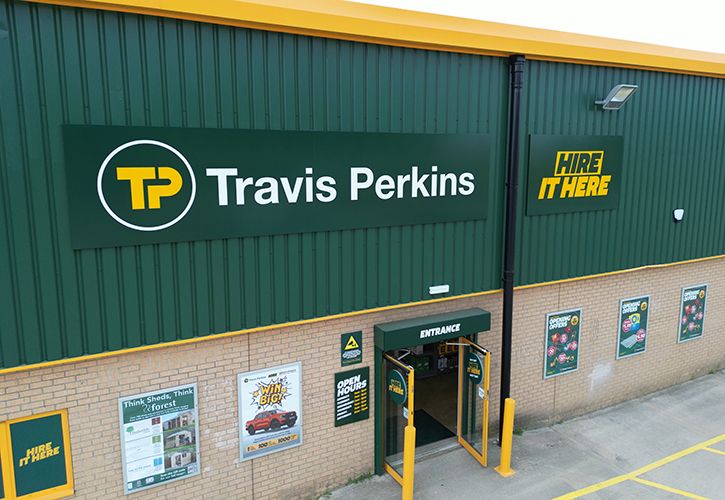
Belfast has topped a new ranking of challenging winter conditions for outdoor trades, while Glasgow averaged 63 rainy days across November, December, January and February, based on five years of weather data.
New research by Travis Perkins compared winter working conditions across 30 major UK locations, looking at daylight, rainy days and average wind speeds.
Belfast finished ahead of Glasgow and Liverpool, with Edinburgh and Plymouth completing the top five.
The analysis combined five years of Met Office weather observations with daylight calculations for November 2026 to February 2027.
Each location received a score out of 100 based on its rankings for limited daylight during an 8am - 4pm working day, rainy days and average wind speed. The three factors were weighted equally, with higher scores indicating more challenging conditions within the sample.
The findings highlight the preparations tradespeople and site teams can make to manage darker conditions, protect materials and adapt outdoor work when the weather changes.
Lauren Hickling HSE Director at Travis Perkins said: “For tradespeople working outdoors, winter preparation needs to cover the whole working day, from accessing the site and unloading materials to completing tasks and packing away.
“Checking lighting, access routes and the forecast before work begins can help teams identify what needs attention. It is also important to keep reviewing conditions, as the work planned at the start of the day may need to change.”
Belfast ranks toughest for winter outdoor work
Belfast’s position reflects a combination of limited daylight during the working day, frequent wet weather and relatively high average wind speeds.
The city placed third for limited daylight, seventh for rainy days and sixth for average wind speed. It averaged 53.2 rainy days across the four selected months, alongside an average wind speed of 10.9mph.
Glasgow finished second overall, recording both the highest number of rainy days and the least daylight during an 8am - 4pm working day.
Liverpool placed third, ranking among the five highest locations for both rainy days and average wind speed.
The ten highest-ranking locations, with scores out of 100, were:
- Belfast - 85.1
- Glasgow - 83.9
- Liverpool - 81.6
- Edinburgh - 78.2
- Plymouth - 74.7
- Leeds - 72.4
- Hull - 67.8
- Middlesbrough - 65.5
- Cardiff - 60.9
- Wakefield - 59.8
London recorded the lowest combined score in the sample, followed by Reading and Coventry.
The ranking compares the selected conditions across these locations. Actual conditions will vary between sites and depend on the weather and work being undertaken.
Glasgow tops the ranking for winter rainy days
Glasgow recorded an average of 63 rainy days across January, February, November and December, using observations from 2021 - 2025.
That was approximately 65% more than Southend-on-Sea, which recorded the lowest average in the research at 38.1 days - a difference of almost 25 days.
Manchester followed Glasgow with 61.2 rainy days, ahead of Cardiff on 57.4, Plymouth on 56.9 and Liverpool on 55.9.
The figures count days with at least 1mm of precipitation. They measure how frequently wet conditions occurred, rather than how much rain fell or whether it rained during working hours.
For outdoor trades, repeated wet weather can require closer attention to access routes, surfaces and storage areas, even when work can continue.
Scottish cities have the smallest daylight window during the working day
Glasgow and Edinburgh both averaged around seven hours and 35 minutes of daylight during an 8am - 4pm working day, with Belfast averaging seven hours and 39 minutes.
Newcastle upon Tyne and Middlesbrough completed the five locations with the smallest daylight window.
These averages cover the full four-month period. Individual days around midwinter have substantially shorter daylight windows, making suitable lighting important for work areas, walkways and deliveries.
Daylight also does not guarantee adequate visibility for every task. Buildings, shadows and weather conditions can affect how clearly workers can see.
Plymouth leads Brighton and Bournemouth as the windiest location
Plymouth recorded the highest average wind speed across the months analysed, at 13.4mph, followed by Brighton on 13.3mph and Bournemouth on 13.1mph.
Edinburgh and Liverpool completed the top five, averaging 12.4mph and 11.5mph respectively.
For outdoor trades, wind is an important consideration when planning to lift operations, handling large materials and working at height.
Checking local forecasts and monitoring conditions throughout the day helps teams identify when additional precautions or changes to planned work are needed.
Four checks to help prepare for winter working
Alongside the research, Travis Perkins has outlined four practical considerations for tradespeople and site teams as daylight and weather conditions change.
1. Check lighting before daylight fades
Review lighting across work areas, steps, pedestrian routes and loading areas before work begins. Lights should be positioned to reduce glare and shadows, with cables kept clear of walkways.
The Health and Safety Executive advises providing artificial lighting where natural light is inadequate. Emergency lighting should also be provided where failure of the main lighting would create a risk.
2. Keep routes clear and check conditions underfoot
Rain, mud, wet leaves and ice can affect routes used by workers and deliveries. Check entrances, walkways and changes in level, and keep materials and waste clear of access routes.
HSE’s construction guidance recommends clearly designated, adequately lit walkways, suitable footwear and appropriate treatment of slippery surfaces. Checks should be repeated as conditions change.
3. Protect materials before the weather turns
Check manufacturers’ instructions for storage and application conditions, particularly for products affected by moisture or low temperatures.
Keep moisture-sensitive materials appropriately protected, secure covers and loose items, and make sure storage arrangements allow materials to be retrieved without blocking routes or disturbing unstable stacks.
4. Be prepared to change the programme
Check forecasts before starting work and reassess tasks during the day. Where risks cannot be adequately controlled, work should be adapted or postponed.
HSE advises against going onto roofs in poor conditions such as rain, ice, frost or strong winds, particularly gusting winds. Historical averages should never be used to decide whether a task is safe on a particular day.
Hickling added: “Preparing materials, lighting and access routes in advance gives teams more opportunity to address problems before they affect the working day.
“However, preparation also means knowing when to change the plan. If visibility, surfaces or wind conditions mean a task cannot be completed safely, the programme should be adapted or the work postponed.”
Source : Travis Perkins
Image : Travis Perkins


Insight DIY is the only source of market information that I need and they always have the latest news before anyone else.


Don't miss out on all the latest, breaking news from the DIY industry