
UK DIY News
How Kitchen Design is Evolving to Meet Modern Living
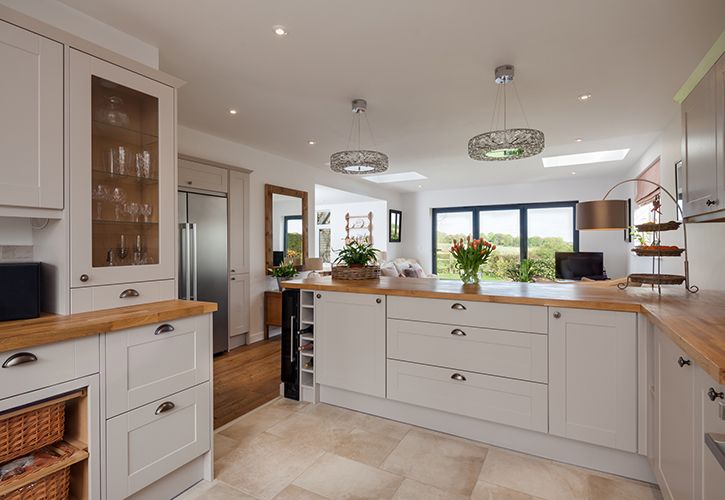
ONS data shows that 42% of UK workers now do at least some of their job remotely, up from around 10% before the pandemic. The kitchen felt that change more than any other room. It absorbed the home office, the dining room, and in many households the main social space of the house. The design brief arriving at studios and trade partners today reflects all of that.
Here, the experts at Life Trade, a UK based manufacturer of high-quality kitchen and bedroom solutions, look at how that change in household behaviour has altered what the kitchen is expected to do, and what it demands from the people designing and delivering it.
A Room With a Different Job
The domestic kitchen spent most of its history organised around a single purpose. Good layout meant efficient movement between hob, sink and worktop, with the dining room next door handling everything else.
Open-plan layouts pulled cooking and eating into the same space. Remote and hybrid working pulled desk time into it as well. The formal dining room largely disappeared from everyday use, with socialising and casual meals folding back into the kitchen. Mintel's 2025 UK Kitchens report documents the result: households now prioritising layouts that integrate cooking, dining and socialising rather than separating those functions across different rooms.
The island captures this most clearly, as it is a surface used by different people for different things at the same time: someone eating at one end, someone working at the other, someone cooking behind them. A room organised around that kind of simultaneous use cannot be planned the same way as one organised around a single task.
Design as a Response to Behaviour
Planning a kitchen that has to function as a workspace, a dining room and a social space means resolving problems that did not used to arrive at the same time. Where can someone sit with a laptop without being in the way of someone cooking? How do different zones within an open room feel distinct without feeling sectioned off? How does the room manage visual noise across a full day, through a mealtime and beyond it?
Storage is where this becomes most tangible. A kitchen serving multiple purposes needs cabinetry designed around the whole room, with surface space that stays clear across the day. Integrated appliances matter because the room is looked at and lived in continuously, across every hour of use. That places greater importance on the materials and construction details that sit behind the finished kitchen.
Specification Beyond the Layout
Once the layout has been established, construction details determine how the kitchen holds up over years of everyday use. Cabinet carcass depth, door profile and finish specification influence both how long a kitchen lasts and how it looks, because these are the elements a household touches and sees daily.
Board grade and moisture resistance become more critical in a kitchen in constant use than in one only used briefly each day. Hinge and drawer runner cycle ratings, often overlooked at the design stage, affect whether storage continues to function properly after years of repeated opening and closing. Worktop and door finishes need to withstand scratching, heat and staining, since continuous use exposes wear far earlier than occasional use. These specification choices separate kitchens built for long-term performance from those judged mainly on their appearance at completion.
What This Asks of the Trade
Clients are arriving at the design stage with a clearer expectation of how the finished kitchen should perform. Finish and material are considered as carefully as layout, and specification is now part of the conversation much earlier in the process.
Paul Berryman, Head of Life Trade says: "What we notice is that the trade partners who consistently deliver well are the ones who treat specification as part of the design process. They come to us knowing what they need and why, the profile, the finish, the construction details, because they have already worked through how the room needs to function. The partners who struggle are usually the ones trying to make those decisions too late."
Image : frazaz / iStock / 900925424




Insight DIY always publishes the latest news stories before anyone else and we find it to be an invaluable source of customer and market information.


Don't miss out on all the latest, breaking news from the DIY industry